
Day tour options from Lima 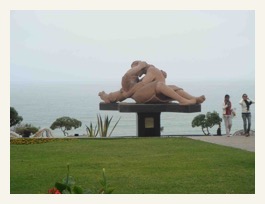 Below are just a few of the many options for touring when in Lima that may added to your Peru tour itinerary. This vibrant city has a multitude of museums, fine restaurants, countless shops and markets, along with great parks and plazas. Most of our tours are with private guide service so you customize stops and allocate time at locations as desired.
More than 400 years ago, the Spanish conqueror ("conquistador") Francisco Pizarro named Lima the City of the Kings ("Ciudad de los Reyes"). Nowadays, that same city, which rose from the lands of the native chief Taulischusco, is a metropolis of over 8 million people who proudly preserve the colonial convents and mansions which are symbols of their traditions. Lima, the capital of Peru, was founded on January 18, 1535. It is now a modern city which, while constantly expanding, has also managed to maintain the elegance of its Historic Center. Declared a UNESCO World Heritage Center, due to the large number of artistic monuments found there, Historic Lima is an enchanting haven of a period long gone.
Lima is one of the most interesting cities in South America with a huge archaeological, historical and cultural past. Long before the Common Era until the arrival of the Spaniards numerous highly advanced cultures settled the area of today's Lima. 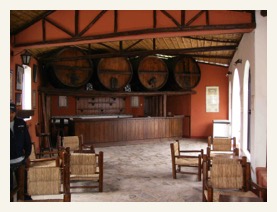 Even nowadays they amaze us with their complex skills in construction, agriculture and arts. The Spanish colonists added to this legendary cultural legacy. This completely different culture with European and Moorish influences are mixed with the indigenous cultural and religious inheritance. In the last couple of hundred years immigrants from Africa and Asia added their part. The fusion of so many different cultures and traditions makes Lima and Peruvian cuisine what it is today. A reflection of this complexity can be found in an incredible number of museums spread around the city. They display the richness and diverse facets of Lima's and Peru's culture. There is something for everyone: archaeological, cultural and historical museums, art and popular art museums, museums dedicated to famous Peruvian personalities, technology and military museums, natural history and earth science museums, antique autos, and many others.

LIMA CITY TOUR
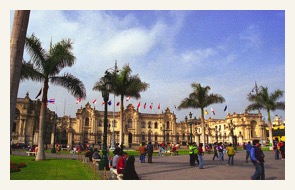
We then head to the Main Square, called the Plaza Mayor or Plaza De Armas. Lima's Plaza Mayor is the "heart" of the city, lively and Creole to the core, a "heart" which started to beat the very day the city was founded. More beautiful than ever due to its recent renovation, its bronze fountain stands out; with its statue of the Angel of Fame holding a clarion in its left hand and its right a flag bearing both Lima's and the Crown's coat of arms.
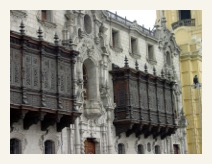
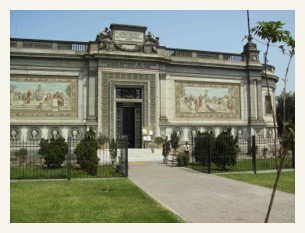
Then we stroll through the most popular pedestrian street in Lima, the Jiron de la Union, to Plaza St Martin, which was inaugurated in 1921 in celebration of the 100th anniversary of the independence of Peru. On the plaza is the historic hotel, the Gran Bolivar, which is worth a look around and maybe enjoy a "chela" (beer), or its bar’s famous Pisco Sour. There are many great places downtown for lunch. One of the popular and most charming ones is the historic El Cordano Bar, founded by Italians and famous for its sandwiches, such as “Butifara”. You return to the hotel in the late afternoon.
Note: If desired you can combine the Downtown City Tour (about 3 hours) with one of the major museums of Lima: the Museo Arqueologico, Museo Larco Herrera, or Museo de Oro.

PACHACAMAC & LURIN VALLEY TOUR
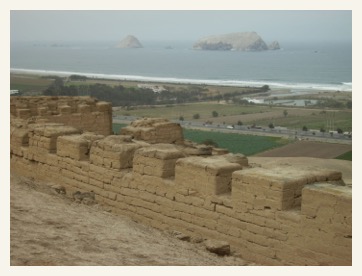
On this full day tour (about 8 hours) you travel south out of the city along the Pacific coast to the Lurin Valley. First stop is at Hacienda Mamacona (or similar) to see their facilities for viewing Peruvian Paso horses. Then you travel into an agricultural area for a tour of a working farm, which grows the lucuma fruit, native from Peru and great for ice creams and desserts.We then explore the ancient ruins of Pacachamac. This archaeological site overlooks the Pacific Ocean and predates the Inca by centuries, however the Inca did maintain it as a religious center. The extensive site, a sacred city and holy place of pilgrimage, includes plazas, adobe-brick palaces, and pyramidal temples, some of which have been rebuilt by the Peruvian government.
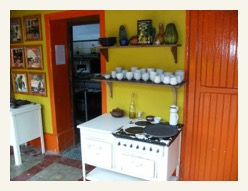
After lunch, we continue our ride to the South to the small town of Azpitia located in the Mala Valley, an area of intense agriculture. There we will learn how Peruvians make Pisco, the national drink, with demonstrations and tastings at a local distillery. We return to Lima in the evening after rush hour traffic dies down.

MERCADO SURQUILLO TOUR & LARCO HERRA MUSEUM
Today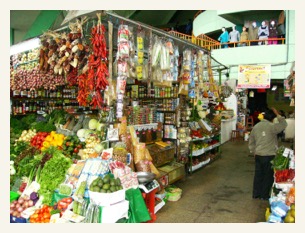
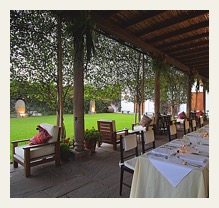

BARRANCO & PUCLLANA TOUR
The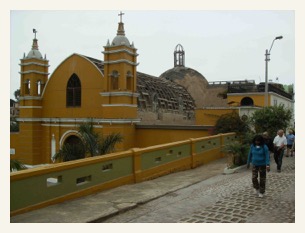
We then explore the artsy and bohemian Barranco neighborhood, including the famous Puente de los Suspiros, or Bridge of Sighs. Then after a short ride on a historic street car across from the Museum of Electricity, you tour the Museo de Arte Colonial Pedro de Osma, located in the Palacio de Osma. This private museum, located in a historic, ornate Barranco mansion, focuses on colonial Peruvian art from areas that were among the most distinguished cultural centers of the day, including Cusco, Arequipa, and Ayacucho. The house is extraordinary, and the collection of religious art, including polychrome sculptures, retablos (altarpieces), and paintings from the Cusco school, are exceptional for a small, private museum. Out back, across the gardens, is a separate building with an amazing collection of 16th to 19th century silver.
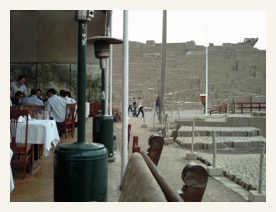
For an outstanding meal (late lunch or dinner), overlooking Pre-Inca archaeological ruins, we go to the upscale Huaca Pucllana Restaurant, located in Miraflores next to the Pucllana ruins. Currently the Pucllana Archeological Zone spreads over 15 hectares and is divided into two well-defined sections. One is of pyramidal structure, 23 meters high. The restaurant is large old house. The bar and dining room inside are beautifully decorated. The high ceilings and low lights give it a special touch. They also have a dining area and bar at the terrace. It's very well decorated, the view is just breathtaking, and their desserts are extraordinary.

COOKING CLASSES
Peru has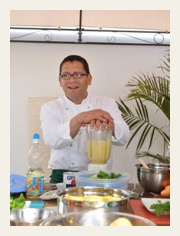
1. A meal in local home. You start stopping by a typical market to appreciate the different products, try some fruit, and learn about the Peruvian flavours. The next stop is Mrs Danmar Paiva‘s home, where she will perform a cooking demonstration of two peruvian dishes (Papa a la Huancaina and Ceviche). Then along with making a traditional Pisco Sour, you can enjoy enjoy the wonderful meal.
2. Cooking class with a chef. Another chance to learn how to prepare some of Peru’s most popular recipes is to have a session working with a local chef. You not only watch the chef preparing the food, but everybody helps prepare their own food. Afterwards you eat your self-made dishes together with the other participants and the chef. Custom classes can be arranged according to interests, skills, available time.

PALOMINO ISLANDS TOUR
We

LIMA BY NIGHT & MAGIC WATER CIRCUIT PARK
In the evening,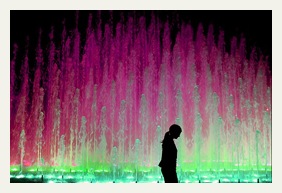
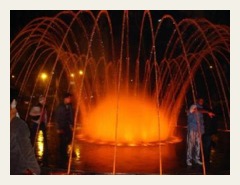
The Park of the Reserve or the Parque de la Reserva in Spanish is a park located in downtown Lima. Built in an irregular shape, it is located between two of the city's principal streets, the Paseo de la Republica expressway and Arequipa Avenue. The Magic Water is currently the world record holder for the largest fountain complex in the world, many of which are interactive. All of the fountains are lighted at night, many with continuously changing color schemes. Around 8 pm you can enjoy the laser show on the Fantasy Fountain.
Then you visit the upscale bohemian neighborhood of Barranco, where you will enjoy a Pisco Sour mixing demonstration and tasting at a lovely little bar located inside an antique train car. Then we will walk to the famous Puente de los Suspiros, next the Church of Barranco. Nearby is also a nice viewpoint for overlooking the Pacific Ocean. After this you are transferred back to your hotel.
The tour includes: Private transportation and guide (4 hours), Admission fee to the Magic Water Circuit, & Pisco Sour demonstration and tasting.

GOLD, GUNS & CARS TOUR
(Day with private guide/driver to two unique museums.)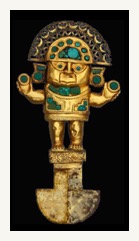
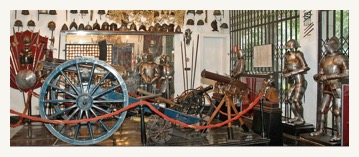
In the afternoon is a visit to a nearby outstanding car museum.
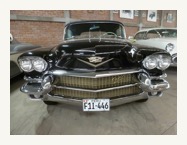
Afterwards you return to your hotel for the overnight.

CANTA TOUR
The peaceful and picturesque town of Canta, Capital of the Homonymous Province, is located 104 kilometres northeast from the City of Lima, on the left bank of the Chillón River. The vision of its narrow and steep little streets, and its big old houses with their traditional two slope roofs, transport travellers in time and turn them into the main feature in a customary postcard. The province extends from the heights of the Cordillera de La Viuda (The Widow) down to the limits of the province of Lima. It comprises the districts of Arahuay, Huamantanga, Huaros, Canta, San Buenaventura, Lachaqui and Santa Rosa de Quives. The remote culture of Atavillos flourished in the zone. Then, in the beginnings of the XVI century, it was subdued by the Inca Pachacútec during his march to the north. The Spanish conquistadors found a prosperous locality in Canta. It was handed to Nicolás de Ribera, El Mozo (The Young), as a commendation. Its inhabitants gave great support to the cause of freedom during the campaign for the independence from the Spanish crown. For this reason it was proclaimed "Heroic Town" in the year of 1839.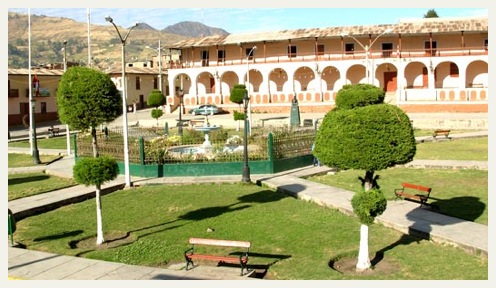
Nearby the city, between the creek of Yanacocha and the town of Huaros, there are two woods of Puyas of Raimondi, a native cactus species that has its natural habitat at over 3000 metres above sea level. The plant reaches 10 metre heights, and it usually lives for up to 100 years, then it drops its seeds and finally dies slowly. It produces the most inflorescence of the world: an average of 17000 flowers at a single time. It carries the name of its discoverer, the illustrious naturalist of Italian ascendance, Antonio Raimondi, and it is an endangered species nowadays.
Canta is at 2942 meters above sea level and the sun shines all over the year in the area. The rainy season is from October to April. One of the culinary specialties is the trout, which is bred in a series of modern breeding-ponds. Other attractions in the area include:
SANTA ROSA DE QUIVES: At 65 kilometers from Lima, there is a beautiful and bucolic small town that bears the name of the Saint Patron of America, Santa Rosa of Lima. The saint resided in those premises along with her parents. She received the sacrament of confirmation from the hands of Archbishop Toribio Alfonso de Mogrovejo in the year 1597. Santa Rosa de Quives was born as a district when it detached itself from the district of Arahuay. The town of Santa Rosa de Quives, which was called either Quives or Quivi, was added to the new administrative unit as an annex. It is currently one of the favorite destinations for the people from Lima who run away from the noise and pollution of the city. It offers its visitors a nice and warm weather all year round at 900 meters above sea level.
ROCK ENGRAVINGS OF CHECTA: They are located in the district of Santa Rosa de Quives, at half way of the road between Lima and Canta. It is a group of about 450 images engraved on rocks with an antiquity of 1500 years approx. The rock engravings represent animals, astral maps, flora species and fantastic creatures.
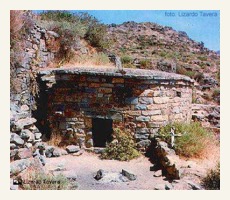
ARAHUAY: The beautiful locality of Arahuay is located 22 kilometers away from Santa Rosa de Quives, at over 2300 meters above sea level, and pierced over a small valley. The small town is surrounded by pre-Inca archaeological remains and a cluster of blue lagoons. The place is ideal for hikes and horseback rides.
OBRAJILLO: The small and quiet town of Obrajillo stands two kilometers away from Canta, at 2764 meters above sea level. Obrajillo was the scenario of a bloody battle during the campaign for the Peruvian independence from the Spanish crown. It is currently true paradise for campers, for there are nice and flowery places on the riverbanks which are ideal for camping. There are beautiful colonial houses standing around its main plaza which communicate through small snaky streets and old balconies.
CANTAMARCA: The archaeological site of Cantamarca is found at 3500 meters above sea level, and 15 kilometers away from Canta. The compound shows the remains of what once was a fortified city that belonged to the Atavillos culture. An aqueduct and four chullpas (a sort of Inca cemetery) are kept in the zone. The locals celebrate the Festivity of the Cross during the first three days of the month of May in the area.
THE FORTRESS OF SINCHIPAMPA: A fortified site; its buildings are comprised by fortified towers, advantage points and defensive precincts.

FULL DAY TOUR TO THE ANCIENT CITY OF CARAL
Caral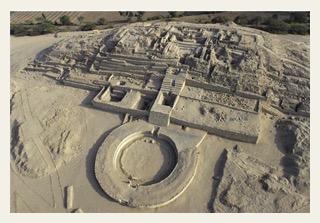
You depart Lima early and drive the Pan American Highway north to Vegeta. The road to Caral cross canals for plantations in the desert growing bean-growing areas, sugar cane, maize, cassava, etc. Once you arrive to the city of Caral we take our guided tour. You will see the different constructions: 7 monumental pyramids, two of which can meet the architectural layout of the first Peruvian civilization and America. These buildings include an amphitheater, barbecue offerings in a circular, central squares, residential areas and religious centers. Then continuing with our tour we return to Huacho, where we meet the main square, church, the old casino and the enchanted lake, then have lunch at Casa Blanca Restaurant. At 5:30pm, you return to Lima and back to your hotel.

HUACAS OF LIMA TOUR
In the ancient Peru,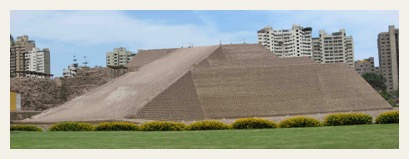
In the heart of the district of San Isidro stands the archaeological complex of Huallamarca. Hualla in the quechua tongue means "uneven" and marca stands for "village", because in its first times this complex presented a structure sustained over spiraled ramps. In the year of 1999, several pieces of pottery were unearthed, possibly indicating a near-by burial of some important character. An aspect that is common to almost all the important Huacas of Lima is that there are many young archaeologists still working on them, along with some non professional people that voluntarily offer their time and efforts. That is the case of the Huaca Pucllana, nowadays a Historical and Cultural Park, located in the District of Miraflores. This complex was the ceremonial and administrative centre of the Lima culture (around 400 A.D.) which held the control of the valley. The evidences at hand point out that many activities of religious cult, rites and sacrifices to worship their gods took place here. It is also possible that the residences of the governing priests were located in this place. The Pucllana Historical Park includes a museum and areas of research, preservation, restoration and cultural promotion, the latter with the task of motivating the community, starting from childhood, to create a conscience of respect and pride for their natural and archaeological patrimony.
Also worth a visit is the "Archaeological Complex Maranga" is located in the "Parque de las Leyendas". The park houses not only the zoo and botanical garden of Lima but as well a big part of Lima's most extensive ancient city and one of the most important pre-Hispanic complexes at the central Peruvian coast.

MUSEUMS OF LIMA TOURS
The fusion of so many different cultures and traditions makes Lima to what it is today. A reflection of this complexity can be found in an incredible number of museums spread around the city. They display the richness and diverse facets of Lima's and Peru's culture. There is something for everyone: archaeological, cultural and historical museums, art and popular art museums, museums dedicated to famous Peruvian personalities, technology and military museums, natural history and earth science museums and many others.There are about 65 museums in Lima. For a full list with museum overviews and details you can review Museums in Lima, Peru - LimaEasy (c).
Below are some of the more popular:
- Larco Museum (Museo Larco)
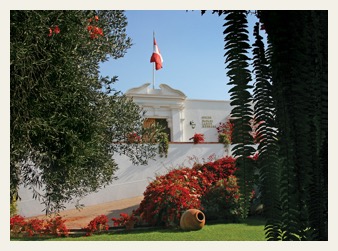
- Gold Museum & Weapons of the World (Museos Oro del Peru & Armas del Mundo)
- Lima Wall Museum
- Japanese Immigration Museum
- Miguel Grau House-Museum
- Morro de Arica soldiers Museum
- Museum of Natural History, Lima (Museo de Historia Natural)
- Museum of the Nation (Museo de la Nación)
- National Museum of the Archaeology, Anthropology, and History of Peru (Museo Nacional del Arqueología, Antropología, e Historia del Perú)
- Presbítero Maestro cemetery
- Ricardo Palma House-Museum

LIMA BIKING TOUR
On this
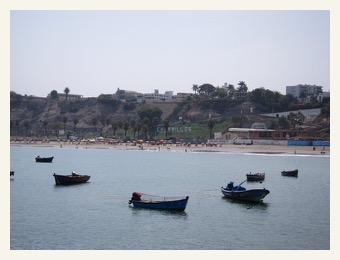
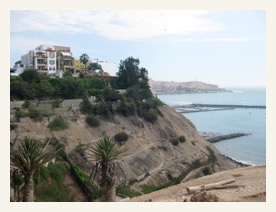
On the return to Miraflores district, we take time to admire street art, murals, and stunning views of the glittering Pacific Ocean before arriving at ‘Love Park’, the final stop of this cycling adventure. This urban park is reminiscent of Gaudi’s work and is dedicated to love and lovers, so soak up the dreamy atmosphere, admire the romance-inspired statues and sculptures and reflect on the beauty of Lima before bidding farewell to your local leader and fellow cyclists.

LIMA FOOD TOUR: 6 Days
(Click here)Return to the top of this webpage :)