
PERU MISTURA
A Cultural and Culinary Exploration in Peru, including Lima and the Mistura food festival!
Like the Spanish word "mistura", which means mixture, this small group tour (maximum 12 participants) mixes cultures, cuisines, and geography.
Mistura is usually the second week in September - contact us to confirm dates or arrange a tour for your party.
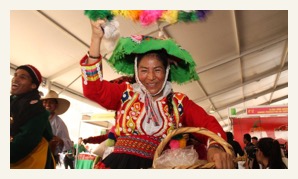 Previous participants on our Mistura tours had fabulous trips! A whole day was spent enjoying the well organized Mistura food festival and still not all was seen. All in the group had fun. We of course took full advantage of all the great food and drink, in addition to shopping among the amazing variety of national food products. Besides all the entertainment to be seen, we were impressed with the organization and management of the event. Even with no Spanish language skills, the expansive festival grounds were easy to navigate and buying products was easy. We appreciated that the grounds and facilities were kept so clean and all the polite people willing to help with directions or interpretations.
PERU MISTURA
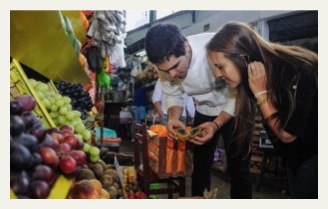 This small group tour will still feature some of the best Lima offers. Escorted by a professional ‘foodie” we will have a full day at the world's largest food festival, called Mistura. You will learn for yourself why Lima is often considered the gastronomical capital of South America. For a nice video overview of Mistura and the foods of Peru, here is a link to a video on VIMEO, called Peruvian Cuisine - a Catalyst for Change.
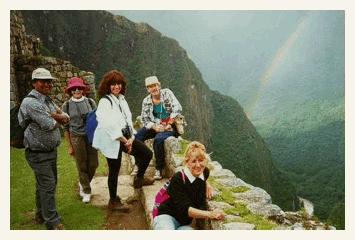 Having traveled throughout Peru, he wanted to offer this special cultural tour with an appreciation and study of Peruvian foods that included the Mistura gastronomy fair in Lima.
The group size is limited to 12 participants. Expert guides will inform of the past and present cultures of Peru, their environment, history, art, and foods. You will experience why National Geographic named Peru the "next Foodie Frontier" in their Best of the World for 2012. You will also receive a video of the acclaimed and moving documentary, Cooking Up Dreams.
Highlights and features of the tour include: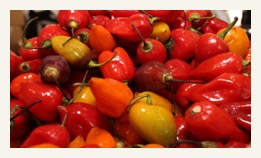
* Mistura annual gastronomy festival and second largest food festival in the world guided by professional food guide
* Lima, the City of Kings
* Touring local market with professional food guide and cooking class with a Lima chef
* A gastronomic focus - from farm to fork - with visits to local markets, cooking demonstrations, and special meals
* Professional, resident guides throughout
* Small group size (maximum 10 participants) for a more in-depth and relaxed travel experience
CONTACT US FOR PRICING AND TRIP BROCHURE.

PERU MISTURA: 5 Days & 4 Nights, September
DAY 1, Saturday
 Reception in Lima from international flights and transfer to the colonial-style Hotel Antigua, located in the upscale district of Miraflores, where we stay for four nights accommodations. (http://www.peru-hotels-inns.com) Miraflores is known for its shopping areas (such as the Indian Market and Kennedy Park), hotels, restaurants, flower-filled parks, and beaches.
DAY 2, Sunday
In the morning, we have a group meeting and enjoy breakfast at the hotel which has wonderful fresh breads from a nearby bakery.
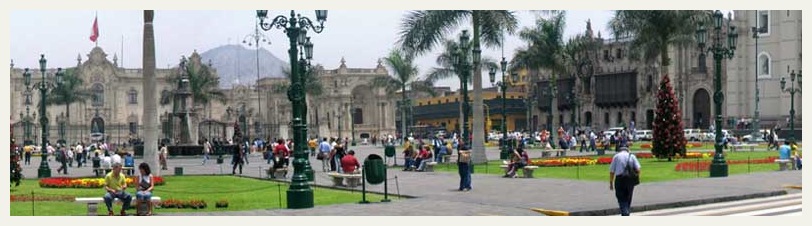
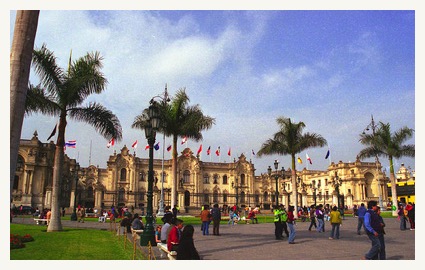
After breakfast, we depart to learn of Peru’s rich colonial heritage. Taking advantage of the lesser traffic on a Sunday, we travel downtown to explore Central Lima. We first head to the impressive Main Square, called the Plaza Mayor or Plaza De Armas, which is more beautiful than ever with the recent renovations. The large plaza is surrounded by such important buildings as the Government Palace, the Archbishop’s house, the Cathedral, and City Hall.
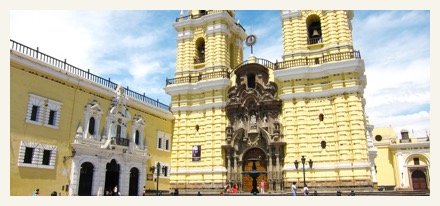 We can then witness services at the San Francisco Convent, arguably the greatest architectural complex of its kind in Latin America. We will explore its amazing network of underground galleries and catacombs that were a cemetery in colonial times. Then we walk through the most popular pedestrian boulevard in Lima, the Jiron de la Union, to the San Martin Square, which was inaugurated in 1921 in celebration of the 100th anniversary of the independence of Peru. On the plaza San Martin is the historic (oldest in Lima) hotel, the Gran Bolivar, which is worth a look around.
For a pico sour demonstration and rest, we stop downtown at the popular and charming historic El Cordano Bar, founded by Italians and famous for its sandwiches, such as “Butifara”. We can then stroll the pedestrian boulevard of Paseo de los Escribanos, one of the most beautiful stretches of buildings in the area. Known as “The Writers’ Way”, because in the past, when much of the population was illiterate, locals came here to have their messages to loved ones and friends transcribed. With its signature yellow buildings, it’s a favorite among residents and visitors and has many eateries. We should also be able to snack on some of the commonly sold quail eggs from one of the street vendors.
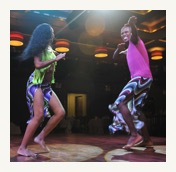 For lunch we can go to La Dama Juana. While it has a large buffet of delicious Peruvian Cuisine, it is best know for its entwining shows. The show features dancers performing regional dances which highlights the many cultures of Peru.
After lunch, we will go for a stroll through the artsy and bohemian Barranco neighborhood, full of grand mansions and historic buildings. We will also see and learn the story of the famous Puente de los Suspiros, or Bridge of Sighs, on the walking tour.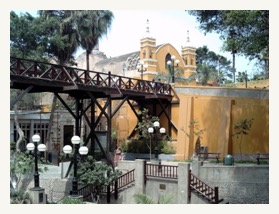
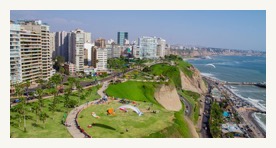
After a rest at the hotel, for those who would like we can arrange reservations and transportation to the upscale Huaca Pucllana Restaurant, located in Miraflores overlooking the Pre-Inca archaeological Pucllana ruins. (Costs are not included.) Currently the Pucllana Archeological Zone spreads over 15 hectares and is divided into two well-defined sections. One is of pyramidal structure, 23 meters high. The charming restaurant is was a large old house. The high ceilings and low lights give it a special touch. They also have a dining area and bar on a lovely terrace. The view of the ruins is just breathtaking and their desserts are extraordinary.
 (Note: Unless noted otherwise, dinners are not included to allow you the freedom of choice regarding what to eat and where. The local guide will assist with any desired dinner reservations, or you can choose to eat at the hotel, or nearby restaurants, such as in Kennedy Park along the Calle de Pizza, or seaside at the nearby Larcomar Mall. Famous Lima restaurants include: La Rosa Nautica, Punta Sal, Astrid y Gaston, Panchita, Rafael, Costanera 700, Malabor, Mangos, AmaZ and Caplina among others which can provide unforgettable dining experiences.)
DAY 3, Monday
 Today we learn about the foods and pre-Columbian cultures of Peru along with a special market tour and private cooking class with professional chef.
The early morning is free to enjoy a nice breakfast at the hotel, relax, explore Miraflores, or shop in the nearby "Indian Market". A few blocks from the hotel and one block from the roundabout in Kennedy Park many artisan shops sell nearly everything that Peruvian craftsmanship has to offer. It is a 10 block walk or about $3 to taxi. You can buy souvenirs, artisan handicrafts, jewelry, silverware, alpaca clothing, T-Shirts, pottery, paintings, wooden pieces, and much more from all over Peru. It is a place you can shop 'til you drop and most shops stay open until about 9pm!
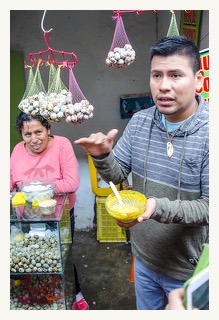 Late morning, we meet "professional foodie", Arturo Rojas. An experienced food guide, it is hard to stump him with questions. Here is a nice article in which Arturo is mentioned: Final Peru Dispatch: My Lima food orgy. | C-Monster
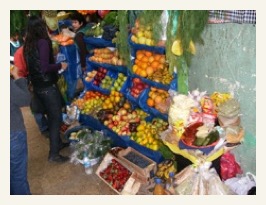
We then have a tour to the Mercado Surquillo in Miraflores or the Magdalena local market. The market provides a great place for an introduction to the great diversity of foods in Peru. The local market contains a wide variety of well-stocked breads, fruits, cheeses, fish, meats, potatoes, dried beans, nuts, seeds, herbs, flowers and many of the natural products from all over the country of Peru, including many of the pre-Columbian food items of Peru. Our foodie guide, Arturo will explain the unknowns - how they taste, and are prepared. Of course, you may want to sample for yourself. It is normal to see women from the countryside wearing the colorful dress of their regions selling local products. The market includes an incredible range of produce, meats, fish, and seafood. The restaurant stalls are a great place to view some of the many types of common dishes including many types of causa and fresh ceviche. This combination of marinated fresh seafood is one of Peru’s most famous dishes.
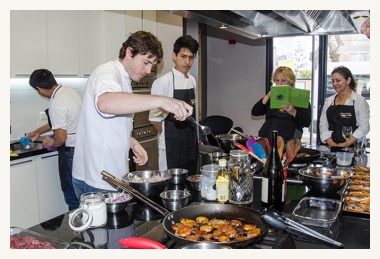 After the market tour, for lunch we have a special private cooking class at Urban Kitchen! It is somewhat of a new concept in Lima, started by Ignacio Barrios. Barrios, age 31, recently returned to his native Lima after four and half years spent in Europe studying at Le Cordon Bleu in London. He also worked in fine dining restaurants, at London’s Wild Honey and Astrid y Gastón in Madrid. Once he returned to his native Lima, he had ”three or four ideas” in his head about the gastronomy-related business he wanted to create. After a year of developing the project and working with his original career in marketing, Urban Kitchen opened its doors in January of 2014. Click here for their Facebook Page.
In the later afternoon, we visit one of Lima’s outstanding museums, the Larco Herrera Archeological Museum to learn of the ancient cultures of Peru and have lunch (independently, so you have control over your museum viewing time). The museum is housed in an 18th century vice-royal mansion built over a 7th century pre-Colombian pyramid. Its galleries provide a thorough overview of 4,000 years of Peruvian pre-Colombian history. The museum has the world’s largest private collection of pre-Columbian art, including Moche, Nazca, Chimú, Inca artifacts, the finest gold and silver collection from Ancient Peru, and its famous erotic art ceramics.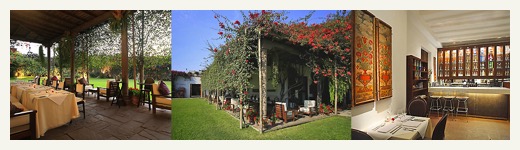 The museum also provides a beautiful setting for a fine meal of traditional and Novo Peruvian cuisine in its Cafe del Museo. The gourmet restaurant is rated one of the best in Lima, directed by one of Peru's most prestigious chef, Gastón Acurio. With indoor and outdoor patio seating, it has a wonderful atmosphere, located in the terrace and garden alongside the Pre-Columbian pyramid and vice royal mansion that hosts the Larco Collection. Its interior, designed by architect Jordi Puig is planned to make you feel that you are having a meal in the terrace of an old chateau.(Dinner is independent, so you have control over your museum viewing time, or you can wait to have dinner after returning to the hotel in the late afternoon/evening.)
DAY 4 Tuesday, (B/L)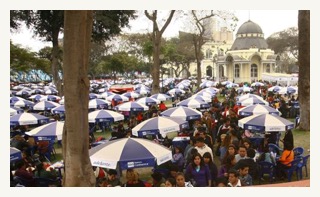
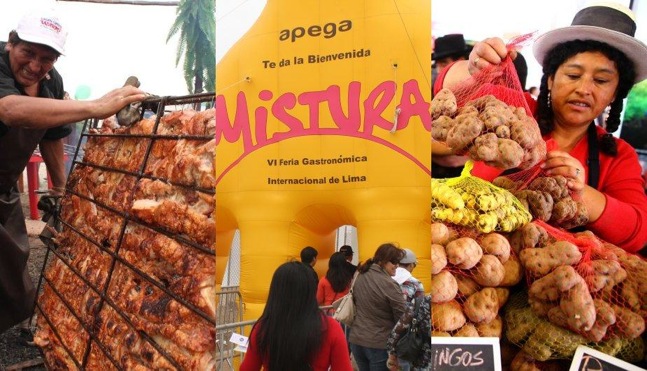
Today along with a professional guide and foodie Arturo Rojas, we enjoy one of the world’s biggest gastronomical events and the largest food fair in the world - Mistura! In 2011, Mistura broke the Turin Italian Cuisine Expo then attendance world-record of 275,000 people with a paid attendance of 405,000. For 2015, the 10-day festival has returned to a former location at the Parque de la Exposición (Exposition Park) in historic downtown Lima. Complete with a Byzantine Pavilion, the sprawling park has a great location next to the palatial Museum of Art of Lima. Over 25,000 international tourists, mostly from the United States, Colombia, Venezuela and Brazil, are expected to attend.
 We have a full day at the festival on a Tuesday to avoid the large weekend crowds. Since we will still be joining a large number of food aficionados, we will arrive in the morning when the gates open and before the lines start at the popular booths. In addition to transportation and entrance fee, we will supply $25 worth of food tickets to get you started. Arturo can help teach us about the incredible diversity of foods, products, ingredients, and cuisines.
After touring with our guide, we will have free time and coordinate / assist with transfers back to the hotel or assist with departures at time of your choosing. To assist in logistics for independent explorations of the sprawling festival, we will provide cell phones for use and regularly meet at a specified location.
Food, and the people that make it, are respected at all levels of society in Peru. During the Mistura food festival, Peruvians from various social, age, and gender distinctions gather around pots and cookers to celebrate Peru’s traditional cuisine, marvel at the creativity, reaffirm their identity and celebrate cultural diversity. Click here for short video about Mistura and the power of food.
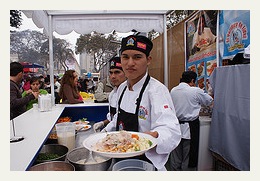
Food has long been associated with Fiesta. The Mistura food fair brings together the various actors in the chain cuisine of Peru: farmers, producers of pisco, cooks, bakers, food sellers, confectionery, huariques, restaurants, cooking schools, and commercial companies. In Mistura a special tribute is paid to mother earth, or Pachacama. The richness of Peruvian cuisine is based on history and at the confluence of particular styles culinary and inputs from different regions of Peru - hence the name mistura, which means mixture. To this regional diversity is added 5 centuries of contributions of European tastes, Arabs, Africans, Chinese, and Japanese.
The organizers, Apega, is again planning to for an incredible number of foodies. For example, at the 2011 Mistura: More than half a million loaves of bread were sold.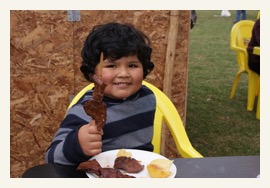 The area of sweets and dessert carts sold more than 230 thousand portions. More than 40 thousand portions were sold in the area of regional cuisine. More than 20 thousand portions sold in the classic cuisine section. In the booths of Javi, Makatong and La Cilindada Pedrito more than 4,000 portions were sold daily. The rustic kitchen section sold more than 95,000 portions. More than 8 tons of fruit were sold - most requested: Orange, Chirimoya, Avocados, Pitajaya and Poro Poro. (We can also attest there was tons of fun!)
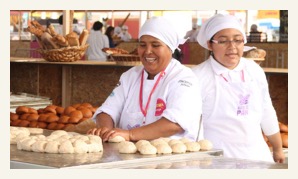 The Mistura food festival attracts internationally acclaimed chefs such as Ferran Adria of El Bulli, Alex Atala of D.O.M. in Sao Paulo, Dan Barber of Blue Hill in New York, Massimo Bottura of Italy’s La Osteria Francescana, Rene Redezipi of Copenhagen’s Noma, Quique Dacosta of Spain’s Quique Dacosta Restaurant. Many famous Peruvian chefs will be there, such as Gaston Acurio, Rafael Piqueras, Rafael Osterling, Virgilio Martinez, Javier Wong, Giacomo Bocchio, Mitsuharu Tsumura, Ferran Adrià, René Redzepi, Alex Atala, Massimo Bottura, Victor Gutierrez, Luis Arevalo, Astrid Gutsche, Jaime Pesaque, Toshiro Konishi, Cyrus Watanabe, and Pedro Miguel Schiaffino (many will have food booths for a taste of their internationally renowned creations).
Scattered throughout the grounds are food stands from several hundred restaurants, hailing from all over Peru and serving specialty dishes. The restaurants are a combination of well-known and higher end places in Lima to simpler regional huariques. Special areas are dedicated to bread, pisco, chocolate, coffee, and Nikkei food. There is also a marketplace with specialty products, demonstration and lecture stages, live entertainment and parades. It’s like a Peruvian food Disney World! While there are plenty of free samples, food and drinks from the stands is bought with tickets, which can be purchased in separate stands throughout the park.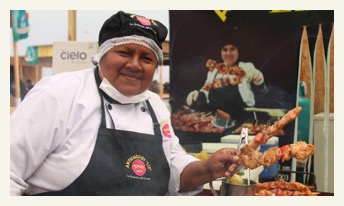
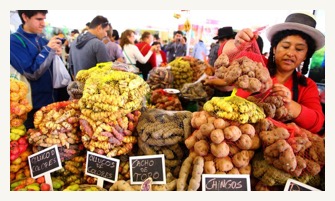
In the Great Market area, about 300 suppliers were present from such areas as Cusco, Puno, Ayacucho, Huancavelica, Apurimac, Huancayo, Oxapampa, Iquitos, Pucallpa, Piura, La Libertad, Lambayeque, Cajamarca, Ancash, Moquegua, Arequipa and Tacna. Many sold their entire production in the early days. Tarwi, cañihua, quinoa, salt maras, custard, coffee, Hot Chili, soft leaf stalk, cocona jams, native potatoes, etc., were just some of the products for sample and sell.
In addition to transportation and entrance fee for the Mistura Festival, we will supply $25 worth of food tickets to get you started on your food and drink discoveries.
DAY 5, Wednesday (B)
After breakfast at the hotel, you may choose among the options of:
1. Transferring to the airport for international flights out.
2. Extend your stay in Lima to experience another day at Mistura, or other explorations in Lima.
3. Continue traveling in Peru for a custom Andean Inca Exploration to Cuzco and Machu Picchu, or trip extensions for the Nazca Lines & Paracas, Like Titikaka, or other.
SERVICES
All airport / hotel transfers and group transportation as listed
All lodging, including hotel taxes, as listed or similar
Tours as described including entrance fees, and tickets for Mistura Festival
Meals as listed (B=Breakfast / L=Lunch / D=Dinner)

ANDEAN INCA EXPLORATION 7 Days & 6 Nights
(Note: This cultural tour may be taken separately or in conjunction with our other Peru tours.)
DAY 1, Wednesday (B/L)
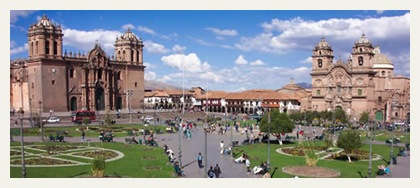 After breakfast we transfer to the airport for mid-morning flight over the Andes Mountains to the city of Cuzco, which transports you to a dramatically different environment. Upon seeing the beauty of Cuzco, situated in a scenic valley at 11,000 feet, it is much easier to understand what may have prompted the Inca to call this area the "navel of the world". Tonight and tomorrow you stay in a colonial-style hotel, the Casa San Blas. This boutique hotel is centrally located near the Main Plaza in the “artsy” neighborhood of San Blas.
After check-in at the hotel, we have a welcome cup of coca tea and orientation session. Afterwards you are encouraged to take a siesta and relax at the hotel to get acclimated to the altitude. For lunch we may go to the nearby Pachapapa Restaurant for some of its popular homemade-style chicken soup, or other delicious dishes.
A guided afternoon walk introduces you to your surroundings and the historic center of Cusco, a UNESCO World Heritage Center.
DAY 2, Thursday (B/L)
Today is a walking tour of Cuzco, a UNESCO World Heritage Center. Along the way, we can (Why would we not!) stop at a Chocolate Shop and Museum, to be tempted by their interesting flavors including, chili, cinnamon, maca (an Andean plant) and lúcuma (a Peruvian fruit).
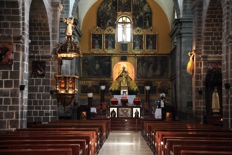
 The tour introduces you to the impressive colonial historical city, with visits to such places as the Arzobispo Palace, the Main Cathedral of the Plaza De Armas, San Francisco´s Botanical Gardens and much more. The Inca founded Cuzco as the capital center of their empire and it is still considered the” archaeological capital of the Americas”. Cuzco is the oldest, continuously inhabited city in the western hemisphere and evidence of its long history surrounds you. Massive Inca-built stone walls serve as foundations for the red tile-roofed colonial buildings. Here you can visit some of the oldest and grandest cathedrals in the New World. The feeling of history comes alive in the faces and language of the local Quechua-speaking, descendants of the Incas.
Before lunch a walk is planned through the colorful and vibrant San Pedro market to familiarize yourself with local ingredients. This covered, open-air market is Cuzco’s largest and full of a great variety of local fruits, vegetables, meats and cheeses. No doubt hungry by then, we will then go to a local restaurant.
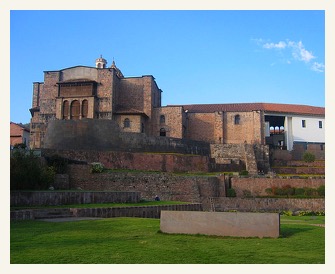
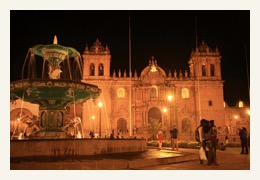 After lunch, we visit and learn about Coricancha, Temple of the Sun, and the new discoveries from archeological excavations. The Coricancha temple was one of the most opulent and revered temples of the Inca. We will also explore the imposing Church and Convent of Santo Domingo which the Spanish built over the Inca spiritual complex.
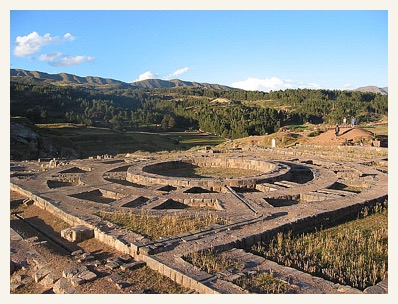 In the late afternoon we head out of town to the spectacular Inca ruins of the immense Inca fortress-temple of Sacsayhuaman, strategically built overlooking Cuzco. The scale of the construction, with the use of stones larger than cars, is sure to astound. You may also see the Inca shrines of Kenko, an outdoor amphitheater and Tambomachay, where a natural spring still feeds ancient Inca baths.
For dinner on your own, the San Blas district has a great variety of fine restaurants, including the Hotel Monestario for upscale dining and the local guide can assist.
DAY 3, Friday (B/L)
After breakfast, you begin your private tour leaving Cuzco. We take a visually stunning ride through the countryside to the Sacred Valley to the archaeological site and Indian village of Pisac. The extensive agricultural terraces in the valley showcase the efficiency an complexity of the Inca Empire.
We then take a visually stunning ride through the countryside to the Sacred Valley to the archaeological site and Indian village of Pisac. The extensive agricultural terraces in the valley showcase the efficiency an complexity of the Inca Empire.
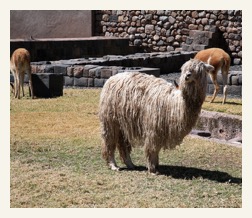 In route, is a visit to Awanakancha, or “Palace of the Weaver” in the indigenous language of Quechua. Various communities work with Awanakancha to present weaving demonstrations at the farm and there is an exhibit on traditional dyes for coloring the textiles. It is also a large lama farm that showcases all four members of the Andean camelid family: llamas, alpacas, guanacos, and vicuñas.
Then on to the Inca ruins of Pisaq, which are strategically located on a ridge-top overlooking two scenic valleys that are etched with extensive agricultural terraces. Covering an area four times larger than Machu Picchu, the central complex of temples in this ancient citadel was protected on all sides by high walls and gateways. In the valley, at the colorful Pisac village, you can examine (and buy) local goods such as; fruits, vegetables, coca leaves, mineral dyes, weavings, stone carvings, and a great variety of handicrafts.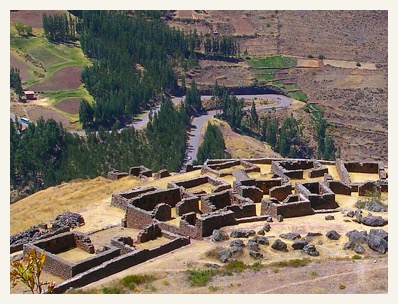
Later, we continue through the Urubamba Valley with its spectacular mountain scenery that includes quaint villages, terraced valleys, and towering snow-capped peaks - all overlooking the white-waters of the Urubamba River. Much of the scenery looks like it was created just yesterday!
Next is Ollantaytambo, an ancient Inca fortress and current Quechua city, that is an excellent example of ancient city planning and architecture. The ancient Inca city plan is evidenced by the remaining (still utilized) roadways, pools, canals and enormous stonework. The original water canals of the Inca irrigation system still function as important parts of the communities' life. It is also an excellent example of living history, as today's towns people still live in structures that housed the Incas of the 14th century.
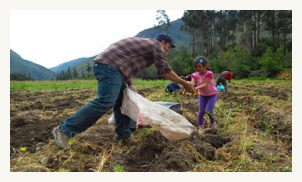 Outside of Ollantaytambo we have lunch at El Albergue Farm, nestled within the terracing of Ollantaytambo. The restaurant and farm features a fork to table approach. They produce many of our own vegetables, corn, quinua and potatoes. You are invited to visit the farm and even give farm work a dig if so inclined. The farm is worked without the use of agrochemicals or synthetic fertilizers, and using many of the traditional techniques that have been around for centuries: plowing with oxen, rotating crops and using biological controllers to regulate pests and disease. You enjoy the meal under a thatch roof in the middle of the farm with views of the Inca temple of Ollantaytambo, Mount Pinkulluna and the Veronica Glacier. Food is served family style accompanied by fresh salads and a variety of sauces, including tasty uchucutas. The experience also includes a chance to work on the farm helping with whatever is at hand, be it digging potatoes, planting crops, husking corn, or any myriad of farm jobs. Groups are invited to play volleyball or just relax in the fields for the afternoon.
The next two overnights is nearby in Ollantaytambo at the lovely Pakaritampu Hotel with its colorful gardens and nice restaurant. Here you will be close to the train station for next morning travel to Agua Calientes. (www.pakaritampu.com).
DAY 4, Saturday (B/L)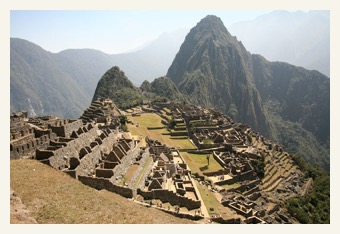
We have an early rise so we can depart on one of the first trains to Machu Picchu to be there as the sun rises over the mountains, which is between 7 - 8am on a clear morning. A short walk (one block) takes us to the train station for travel up the valley to Agua Calientes. The rails run along side the Urubamba River, past towering mountains and through lush forests. Upon arrival at the Machu Picchu train station in Agua Calientes (about a hour and half ride), then a 20 minute bus ride takes us 2,000 feet up to the site's entrance.
After an introductory walking tour of the ruins, the remainder of the day is free for self-exploration and discovery of this magnificent site. Enjoy lunch (voucher provided so you can go at your own timing from 11.30am - 15.00pm) at the Tinkuy Buffet Restaurant in the Machu Picchu Sanctuary Lodge, adjacent to the ruins entrance. As the sun sets, we return to the Agua Calientes train station (last bus down is around 5:30pm) for the evening train back to Ollantaytambo and the hotel.
DAY 5, Sunday (B/L)
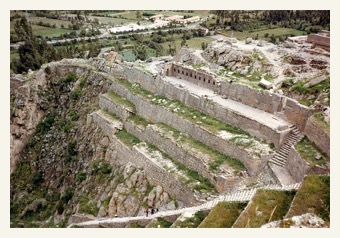 Before departing Ollantaytambo, we first explore and learn about the adjacent Inca ruins of extensive terraces, massive stoneworks, and still functioning water features. We then begin our return to Cuzco, taking a different route and touring the traditional Indian village of Chinchero, the Moray Inca ruins, and the ancient and still used, salt works at Salinas along the way.
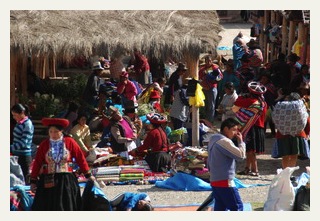 We then visit the Quechua town of Chinchero which is famous for its colorful weavings and Sunday market. There you can enjoy a weaving demonstration and may shop for high quality textiles. Chinchero is located at an altitude of 3,700 meters where you can see the entire plateau of Maras and the Vilcanota's Mountain Range with its +5,000 meters glaciers like Chicon and Veronica. We will have a picnic lunch and share with local residents their traditional dishes such as cuy (guinea pig), watia (food / potatoes baked in the earth), corn, etc.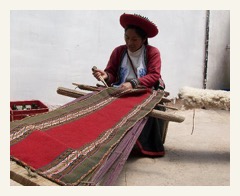
After lunch, our travel through the scenic mountains also allows you to view the impressive salt pools at Maras. The ancient pools form by water emerging from the mountain and the evaporating ponds are still used to extract salt.
We then visit one of the Inca's engineering marvels, the ruins of Moray. The site's agricultural terraces form a sunken amphitheater that creates a variety of mini ecosystems due to differences in sun exposure, altitude, irrigation, and temperatures. It is thought that the site was used by the Inca to experiment with growing different plants.
You then continue the drive back to Cuzco and transfer to the Hotel Casa San Blas for two overnights.
Casa San Blas.
DAY 6, Monday (B)
This is a free day in Cuzco for personal exploration and relaxation to allow you the maximum amount of choice on optional activities.
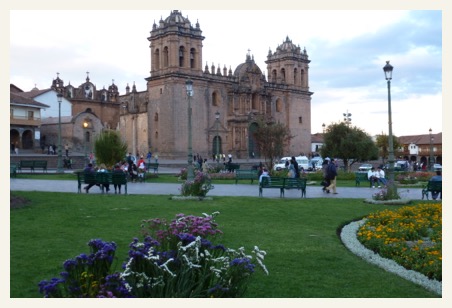 Cuzco is one of the world's top travel destinations and a myriad of options are available. If desired, you can arrange a day of white-water rafting, mountain biking, horseback riding, hiking, or explorations of surrounding remote Inca ruins. The city of Cuzco also offers wonderful art and history museums, countless shops with a great variety of handicrafts and antiques, a wide variety of restaurants, pubs & peñas, numerous churches, cathedrals and other outstanding historic architecture line the cobble stone streets. Cuzco is safe (with a little common sense) to explore on your own and taxis are convenient. You can also hire a guide for the day if desired. Out-of-town day trips, private guides, and sport activities can be arranged directly with the local personnel in Cuzco. (Note that lunch is not included this day to allow for the most options.)
DAY 7, Tuesday (B)
Morning transfer to airport for flights to Lima.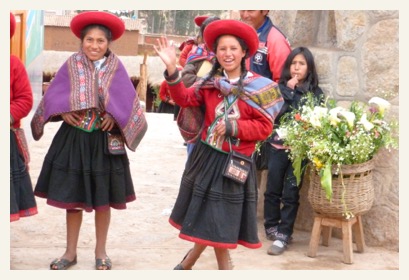
Upon arrival in Lima, you have several options:
1. Stay at airport and connect to international flights out.
2. You may choose to overnight in Lima (includes airport transfers, hotel and breakfast). You then may:
A. Fly out the next morning.
B. Fly out the next night (day use of hotel day room is $40/pp/dbl).
3. Or, you may choose to continue travels in Peru with custom trip extensions. You may see our webpage for Peru travel options and we are happy to customize an itinerary for you.
SERVICES
All airport / hotel transfers and group transportation as listed
All lodging, including hotel taxes, as listed or similar
Tours as described including entrance fees
Meals as listed (B=Breakfast / L=Lunch / D=Dinner)
CONTACT US FOR PRICING AND DETAILS
You are welcome to call us anytime at 1-239-992-9660, or toll free at 800-446-9660, or email us at travel"at"GoExploring.com.
Return to the top of this webpage :)

You may click here for photos from our previous Peru Mistura tours.
Here are some nice videos of the Mistura Food Festival (on the share link, you can go to URL and see full size)
1st Day
Return to the top of this webpage :)
A Cultural and Culinary Exploration in Peru, including Lima and the Mistura food festival!
Like the Spanish word "mistura", which means mixture, this small group tour (maximum 12 participants) mixes cultures, cuisines, and geography.
Mistura is usually the second week in September - contact us to confirm dates or arrange a tour for your party.
PERU MISTURA

Also available in conjunction with the Peru Mistura Tour are trip extensions to Cuzco and Machu Picchu, to the Amazon, and to Paracas including the Nazca Lines. See below for a special post-trip ANDEAN INCA EXPLORATION of 7 Days & 6 Nights. (Our Peru tours may be taken separately or in conjunction with our other trips in Peru.)

These unique tours were designed by anthropologist Charlie Strader, President of Explorations. His love and appreciation of Peru’s cultures and food diversity started with travels there in the 1980’s.
The group size is limited to 12 participants. Expert guides will inform of the past and present cultures of Peru, their environment, history, art, and foods. You will experience why National Geographic named Peru the "next Foodie Frontier" in their Best of the World for 2012. You will also receive a video of the acclaimed and moving documentary, Cooking Up Dreams.

Highlights and features of the tour include:
* Mistura annual gastronomy festival and second largest food festival in the world guided by professional food guide
* Lima, the City of Kings
* Touring local market with professional food guide and cooking class with a Lima chef
* A gastronomic focus - from farm to fork - with visits to local markets, cooking demonstrations, and special meals
* Professional, resident guides throughout
* Small group size (maximum 10 participants) for a more in-depth and relaxed travel experience
CONTACT US FOR PRICING AND TRIP BROCHURE.
PERU MISTURA: 5 Days & 4 Nights, September
DAY 1, Saturday
DAY 2, Sunday
In the morning, we have a group meeting and enjoy breakfast at the hotel which has wonderful fresh breads from a nearby bakery.
After breakfast, we depart to learn of Peru’s rich colonial heritage. Taking advantage of the lesser traffic on a Sunday, we travel downtown to explore Central Lima. We first head to the impressive Main Square, called the Plaza Mayor or Plaza De Armas, which is more beautiful than ever with the recent renovations. The large plaza is surrounded by such important buildings as the Government Palace, the Archbishop’s house, the Cathedral, and City Hall.
For a pico sour demonstration and rest, we stop downtown at the popular and charming historic El Cordano Bar, founded by Italians and famous for its sandwiches, such as “Butifara”. We can then stroll the pedestrian boulevard of Paseo de los Escribanos, one of the most beautiful stretches of buildings in the area. Known as “The Writers’ Way”, because in the past, when much of the population was illiterate, locals came here to have their messages to loved ones and friends transcribed. With its signature yellow buildings, it’s a favorite among residents and visitors and has many eateries. We should also be able to snack on some of the commonly sold quail eggs from one of the street vendors.
After lunch, we will go for a stroll through the artsy and bohemian Barranco neighborhood, full of grand mansions and historic buildings. We will also see and learn the story of the famous Puente de los Suspiros, or Bridge of Sighs, on the walking tour.
After a rest at the hotel, for those who would like we can arrange reservations and transportation to the upscale Huaca Pucllana Restaurant, located in Miraflores overlooking the Pre-Inca archaeological Pucllana ruins. (Costs are not included.) Currently the Pucllana Archeological Zone spreads over 15 hectares and is divided into two well-defined sections. One is of pyramidal structure, 23 meters high. The charming restaurant is was a large old house. The high ceilings and low lights give it a special touch. They also have a dining area and bar on a lovely terrace. The view of the ruins is just breathtaking and their desserts are extraordinary.
DAY 3, Monday
The early morning is free to enjoy a nice breakfast at the hotel, relax, explore Miraflores, or shop in the nearby "Indian Market". A few blocks from the hotel and one block from the roundabout in Kennedy Park many artisan shops sell nearly everything that Peruvian craftsmanship has to offer. It is a 10 block walk or about $3 to taxi. You can buy souvenirs, artisan handicrafts, jewelry, silverware, alpaca clothing, T-Shirts, pottery, paintings, wooden pieces, and much more from all over Peru. It is a place you can shop 'til you drop and most shops stay open until about 9pm!
We then have a tour to the Mercado Surquillo in Miraflores or the Magdalena local market. The market provides a great place for an introduction to the great diversity of foods in Peru. The local market contains a wide variety of well-stocked breads, fruits, cheeses, fish, meats, potatoes, dried beans, nuts, seeds, herbs, flowers and many of the natural products from all over the country of Peru, including many of the pre-Columbian food items of Peru. Our foodie guide, Arturo will explain the unknowns - how they taste, and are prepared. Of course, you may want to sample for yourself. It is normal to see women from the countryside wearing the colorful dress of their regions selling local products. The market includes an incredible range of produce, meats, fish, and seafood. The restaurant stalls are a great place to view some of the many types of common dishes including many types of causa and fresh ceviche. This combination of marinated fresh seafood is one of Peru’s most famous dishes.
In the later afternoon, we visit one of Lima’s outstanding museums, the Larco Herrera Archeological Museum to learn of the ancient cultures of Peru and have lunch (independently, so you have control over your museum viewing time). The museum is housed in an 18th century vice-royal mansion built over a 7th century pre-Colombian pyramid. Its galleries provide a thorough overview of 4,000 years of Peruvian pre-Colombian history. The museum has the world’s largest private collection of pre-Columbian art, including Moche, Nazca, Chimú, Inca artifacts, the finest gold and silver collection from Ancient Peru, and its famous erotic art ceramics.
DAY 4 Tuesday, (B/L)
Today along with a professional guide and foodie Arturo Rojas, we enjoy one of the world’s biggest gastronomical events and the largest food fair in the world - Mistura! In 2011, Mistura broke the Turin Italian Cuisine Expo then attendance world-record of 275,000 people with a paid attendance of 405,000. For 2015, the 10-day festival has returned to a former location at the Parque de la Exposición (Exposition Park) in historic downtown Lima. Complete with a Byzantine Pavilion, the sprawling park has a great location next to the palatial Museum of Art of Lima. Over 25,000 international tourists, mostly from the United States, Colombia, Venezuela and Brazil, are expected to attend.
After touring with our guide, we will have free time and coordinate / assist with transfers back to the hotel or assist with departures at time of your choosing. To assist in logistics for independent explorations of the sprawling festival, we will provide cell phones for use and regularly meet at a specified location.
Food, and the people that make it, are respected at all levels of society in Peru. During the Mistura food festival, Peruvians from various social, age, and gender distinctions gather around pots and cookers to celebrate Peru’s traditional cuisine, marvel at the creativity, reaffirm their identity and celebrate cultural diversity. Click here for short video about Mistura and the power of food.
Food has long been associated with Fiesta. The Mistura food fair brings together the various actors in the chain cuisine of Peru: farmers, producers of pisco, cooks, bakers, food sellers, confectionery, huariques, restaurants, cooking schools, and commercial companies. In Mistura a special tribute is paid to mother earth, or Pachacama. The richness of Peruvian cuisine is based on history and at the confluence of particular styles culinary and inputs from different regions of Peru - hence the name mistura, which means mixture. To this regional diversity is added 5 centuries of contributions of European tastes, Arabs, Africans, Chinese, and Japanese.
The organizers, Apega, is again planning to for an incredible number of foodies. For example, at the 2011 Mistura: More than half a million loaves of bread were sold.
Scattered throughout the grounds are food stands from several hundred restaurants, hailing from all over Peru and serving specialty dishes. The restaurants are a combination of well-known and higher end places in Lima to simpler regional huariques. Special areas are dedicated to bread, pisco, chocolate, coffee, and Nikkei food. There is also a marketplace with specialty products, demonstration and lecture stages, live entertainment and parades. It’s like a Peruvian food Disney World! While there are plenty of free samples, food and drinks from the stands is bought with tickets, which can be purchased in separate stands throughout the park.
In the Great Market area, about 300 suppliers were present from such areas as Cusco, Puno, Ayacucho, Huancavelica, Apurimac, Huancayo, Oxapampa, Iquitos, Pucallpa, Piura, La Libertad, Lambayeque, Cajamarca, Ancash, Moquegua, Arequipa and Tacna. Many sold their entire production in the early days. Tarwi, cañihua, quinoa, salt maras, custard, coffee, Hot Chili, soft leaf stalk, cocona jams, native potatoes, etc., were just some of the products for sample and sell.
In addition to transportation and entrance fee for the Mistura Festival, we will supply $25 worth of food tickets to get you started on your food and drink discoveries.
DAY 5, Wednesday (B)
After breakfast at the hotel, you may choose among the options of:
1. Transferring to the airport for international flights out.
2. Extend your stay in Lima to experience another day at Mistura, or other explorations in Lima.
3. Continue traveling in Peru for a custom Andean Inca Exploration to Cuzco and Machu Picchu, or trip extensions for the Nazca Lines & Paracas, Like Titikaka, or other.
SERVICES
All airport / hotel transfers and group transportation as listed
All lodging, including hotel taxes, as listed or similar
Tours as described including entrance fees, and tickets for Mistura Festival
Meals as listed (B=Breakfast / L=Lunch / D=Dinner)
ANDEAN INCA EXPLORATION 7 Days & 6 Nights
(Note: This cultural tour may be taken separately or in conjunction with our other Peru tours.)
DAY 1, Wednesday (B/L)
After check-in at the hotel, we have a welcome cup of coca tea and orientation session. Afterwards you are encouraged to take a siesta and relax at the hotel to get acclimated to the altitude. For lunch we may go to the nearby Pachapapa Restaurant for some of its popular homemade-style chicken soup, or other delicious dishes.
A guided afternoon walk introduces you to your surroundings and the historic center of Cusco, a UNESCO World Heritage Center.
DAY 2, Thursday (B/L)
Today is a walking tour of Cuzco, a UNESCO World Heritage Center. Along the way, we can (Why would we not!) stop at a Chocolate Shop and Museum, to be tempted by their interesting flavors including, chili, cinnamon, maca (an Andean plant) and lúcuma (a Peruvian fruit).
Before lunch a walk is planned through the colorful and vibrant San Pedro market to familiarize yourself with local ingredients. This covered, open-air market is Cuzco’s largest and full of a great variety of local fruits, vegetables, meats and cheeses. No doubt hungry by then, we will then go to a local restaurant.
For dinner on your own, the San Blas district has a great variety of fine restaurants, including the Hotel Monestario for upscale dining and the local guide can assist.
DAY 3, Friday (B/L)
After breakfast, you begin your private tour leaving Cuzco. We take a visually stunning ride through the countryside to the Sacred Valley to the archaeological site and Indian village of Pisac. The extensive agricultural terraces in the valley showcase the efficiency an complexity of the Inca Empire.
We then take a visually stunning ride through the countryside to the Sacred Valley to the archaeological site and Indian village of Pisac. The extensive agricultural terraces in the valley showcase the efficiency an complexity of the Inca Empire.
Then on to the Inca ruins of Pisaq, which are strategically located on a ridge-top overlooking two scenic valleys that are etched with extensive agricultural terraces. Covering an area four times larger than Machu Picchu, the central complex of temples in this ancient citadel was protected on all sides by high walls and gateways. In the valley, at the colorful Pisac village, you can examine (and buy) local goods such as; fruits, vegetables, coca leaves, mineral dyes, weavings, stone carvings, and a great variety of handicrafts.
Later, we continue through the Urubamba Valley with its spectacular mountain scenery that includes quaint villages, terraced valleys, and towering snow-capped peaks - all overlooking the white-waters of the Urubamba River. Much of the scenery looks like it was created just yesterday!
Next is Ollantaytambo, an ancient Inca fortress and current Quechua city, that is an excellent example of ancient city planning and architecture. The ancient Inca city plan is evidenced by the remaining (still utilized) roadways, pools, canals and enormous stonework. The original water canals of the Inca irrigation system still function as important parts of the communities' life. It is also an excellent example of living history, as today's towns people still live in structures that housed the Incas of the 14th century.
The next two overnights is nearby in Ollantaytambo at the lovely Pakaritampu Hotel with its colorful gardens and nice restaurant. Here you will be close to the train station for next morning travel to Agua Calientes. (www.pakaritampu.com).
DAY 4, Saturday (B/L)
We have an early rise so we can depart on one of the first trains to Machu Picchu to be there as the sun rises over the mountains, which is between 7 - 8am on a clear morning. A short walk (one block) takes us to the train station for travel up the valley to Agua Calientes. The rails run along side the Urubamba River, past towering mountains and through lush forests. Upon arrival at the Machu Picchu train station in Agua Calientes (about a hour and half ride), then a 20 minute bus ride takes us 2,000 feet up to the site's entrance.
After an introductory walking tour of the ruins, the remainder of the day is free for self-exploration and discovery of this magnificent site. Enjoy lunch (voucher provided so you can go at your own timing from 11.30am - 15.00pm) at the Tinkuy Buffet Restaurant in the Machu Picchu Sanctuary Lodge, adjacent to the ruins entrance. As the sun sets, we return to the Agua Calientes train station (last bus down is around 5:30pm) for the evening train back to Ollantaytambo and the hotel.
DAY 5, Sunday (B/L)
After lunch, our travel through the scenic mountains also allows you to view the impressive salt pools at Maras. The ancient pools form by water emerging from the mountain and the evaporating ponds are still used to extract salt.
We then visit one of the Inca's engineering marvels, the ruins of Moray. The site's agricultural terraces form a sunken amphitheater that creates a variety of mini ecosystems due to differences in sun exposure, altitude, irrigation, and temperatures. It is thought that the site was used by the Inca to experiment with growing different plants.
You then continue the drive back to Cuzco and transfer to the Hotel Casa San Blas for two overnights.
Casa San Blas.
DAY 6, Monday (B)
This is a free day in Cuzco for personal exploration and relaxation to allow you the maximum amount of choice on optional activities.
DAY 7, Tuesday (B)
Morning transfer to airport for flights to Lima.
Upon arrival in Lima, you have several options:
1. Stay at airport and connect to international flights out.
2. You may choose to overnight in Lima (includes airport transfers, hotel and breakfast). You then may:
A. Fly out the next morning.
B. Fly out the next night (day use of hotel day room is $40/pp/dbl).
3. Or, you may choose to continue travels in Peru with custom trip extensions. You may see our webpage for Peru travel options and we are happy to customize an itinerary for you.
SERVICES
All airport / hotel transfers and group transportation as listed
All lodging, including hotel taxes, as listed or similar
Tours as described including entrance fees
Meals as listed (B=Breakfast / L=Lunch / D=Dinner)
CONTACT US FOR PRICING AND DETAILS
You are welcome to call us anytime at 1-239-992-9660, or toll free at 800-446-9660, or email us at travel"at"GoExploring.com.
Return to the top of this webpage :)
You may click here for photos from our previous Peru Mistura tours.
Here are some nice videos of the Mistura Food Festival (on the share link, you can go to URL and see full size)
1st Day
Mistura 2010
2nd Day
Mistura 2010
3th day
Mistura 2010
4th day
Mistura 2010
5th day
Mistura 2010
Last Day
Return to the top of this webpage :)